A meadow does not change all at once, and it never changes on the same date twice. What it does is keep a calendar of small events — a first bee, a first orchid open, the day the mower goes in, the first hard frost — and if you walk the same route often enough through a year, you begin to read that calendar. This is a phenology checklist: what is worth looking for, roughly when, and how to record it so that next year's notes mean something.
Late Winter into Early Spring: February and March
The meadow looks empty and is not. Hazel catkins hang in the hedge, and on disturbed ground at the edge you may find coltsfoot — yellow, dandelion-like flowers on scaly stems, opening before any leaf appears. That habit gave it the old name "son before the father." Lesser celandine follows in damp shade, and in wet pasture the first genuinely loud event of the year arrives: a skylark climbing and singing, or a lapwing tumbling over the fields with its wheezy, weeping call.
Weather-wise this is a month of contrasts: hard, clear frosts at night, dark wet soil by day. Common frogs spawn in the shallows of any ditch or hollow, usually in the first mild spell after a cold snap, and the spawn is often frosted solid and still survives. Look low. Almost everything happening now is happening within a few centimetres of the ground.
Late Spring: Green Rising, April and May
This is when the meadow stops being a field and becomes a meadow. Grass stretches visibly between visits. Cuckooflower, also called lady's smock, opens in the damper patches — pale lilac flowers on thin stems — and orange-tip butterflies hunt it out to lay their eggs. Cowslips appear, and in old, unimproved meadows the orchids begin: early purple first, then green-winged.
The insects are mostly queens. Buff-tailed and early bumblebee queens are prospecting for nest sites in tussocks and old mouse holes, feeding as they go. The old country saying goes that an oak in leaf before an ash means a wet summer, and ash before oak means a soaking one; either way, watch for the week when the hedges close over and the wind suddenly smells of cut grass and rain.
Early Summer: The Full Stand, June
Peak. The meadow is at its tallest and most layered, and the trick is to look at three heights rather than one.
- Up high: grass seed heads — cocksfoot, Yorkshire fog, sweet vernal — and skylarks singing above them.
- Mid-height: ox-eye daisy, common knapweed, meadow buttercup, red clover, bird's-foot trefoil, and yellow rattle, which parasitises grass roots and is one of the reasons a flower-rich meadow stays flower-rich.
- Down low: the rosettes of hawkbits and plantains, and orchid spikes — common spotted, and bee orchid on chalky ground.
Butterflies arrive properly now: meadow brown, ringlet, marbled white, small skipper. Grasshoppers begin to sing — short, dry, mechanical chirps that get louder and more frantic as the weeks pass. Evenings stay light late enough that a slow walk after supper is worth more than a rushed one at noon.
High Summer and the Cut, July
In a traditionally managed hay meadow, cutting usually happens somewhere between late June and mid-July, depending on the region, the season and the site. The change is dramatic: overnight, a waist-high stand of flowers becomes stubble, then a short green aftermath. Both stages are worth visiting. The cut removes the year's growth but leaves the low leaves intact, and within two or three weeks the meadow is flowering again on a smaller scale.
This is the month for six-spot burnet moths, black with crimson spots, sitting openly on knapweed and thistles in the middle of the day. Ragwort blooms yellow, often with the yellow-and-black striped cinnabar caterpillars stripping it. On warm, still nights in some rough grasslands, female glow-worms glow from low vegetation. Swifts scream overhead, feeding on the aerial insects the meadow produces.
Autumn: Seed, Mist and Departure, August to October
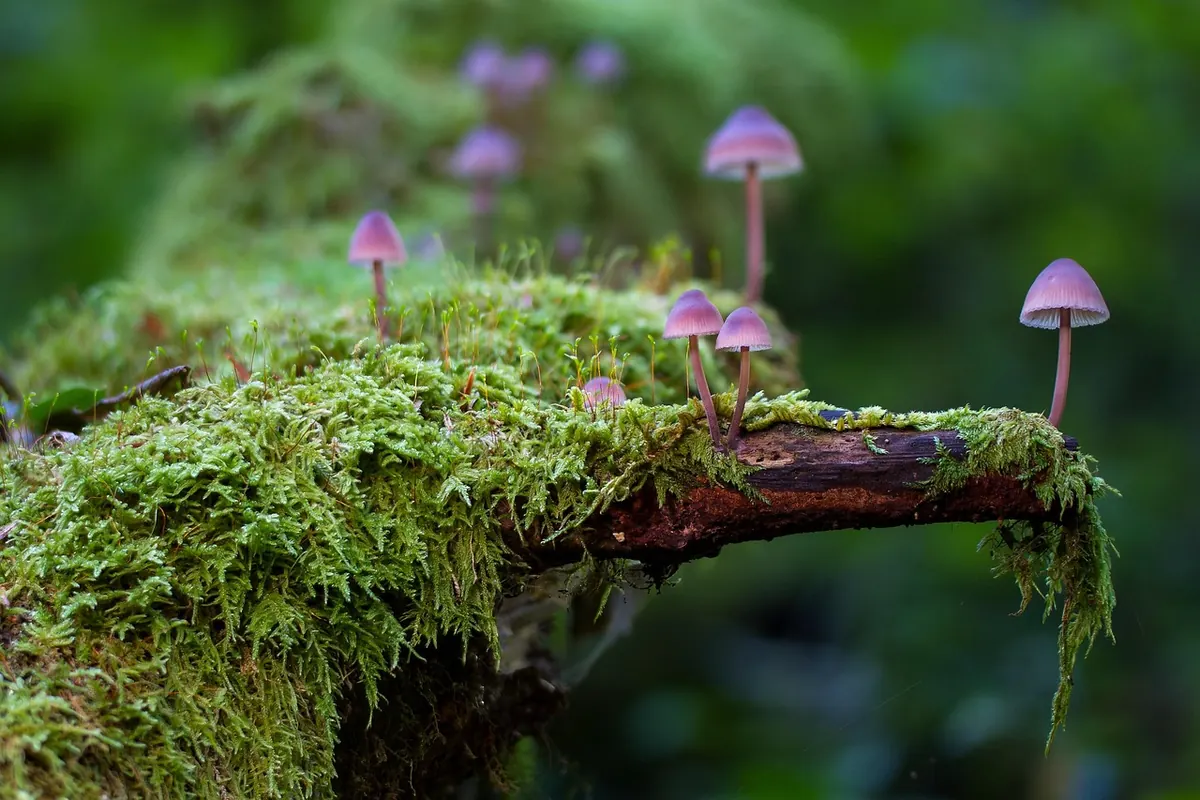
The flowering crowd thins and the seed heads take over — knapweed's dark knobs, devil's-bit scabious, hawkbits, grass heads turning straw-coloured and shedding. Dew-heavy spider webs show up as lines of white across the grass on the first still mornings, and mist gathers in the hollows where cold air pools first. On unimproved grassland, autumn is fungus season: waxcaps in yellow, pink, white and grey, pushing up through short turf and easily crushed by a boot.
Birds change gear. Swallows and house martins gather in chattering flocks on wires and roofs, then go. Redwings and fieldfares arrive from the north and start on the hawthorn and sloe berries in the hedge, moving out into the grass once frost locks the ground.
Winter: Reading a Quiet Meadow, November to January
A meadow in winter is not dormant so much as folded down. Tussocks of grass hold a layer of shelter for overwintering insects and small mammals, and vole runs thread through them under the snow or frost. Barn owls hunt low across rough grass at dusk; kestrels hover in daylight. Snipe and the occasional duck appear when wet meadows flood.
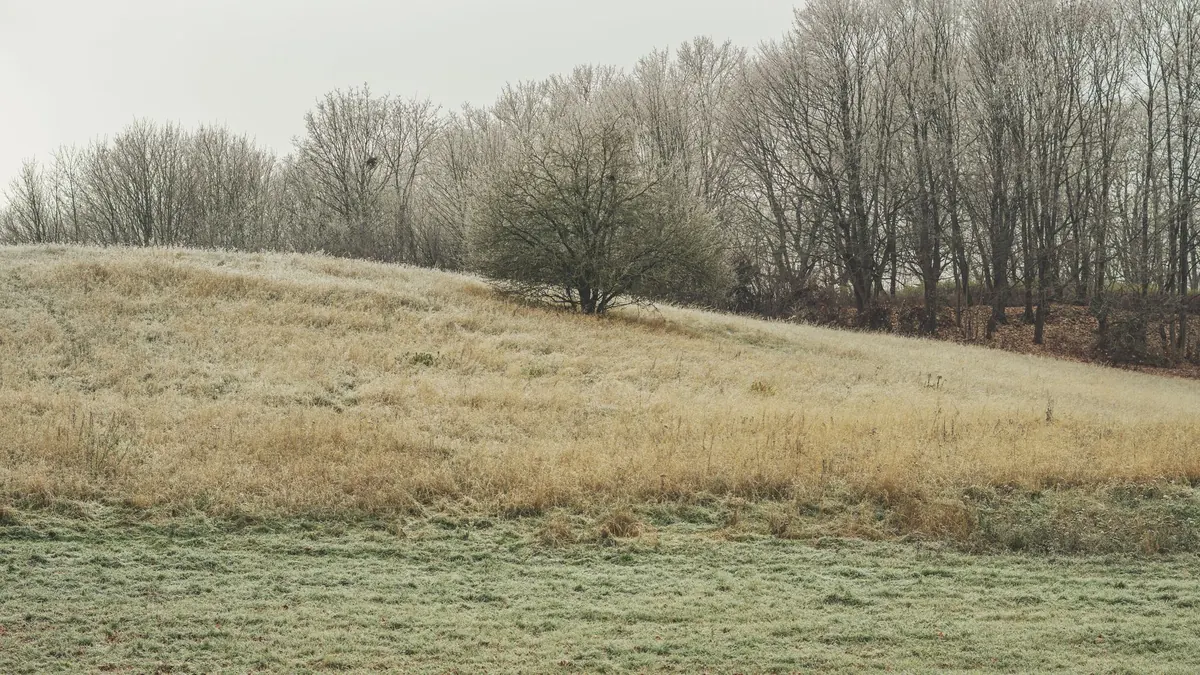
Look for the frost line: the lowest corner of a meadow is frosted first and keeps it longest, and the green rosettes of next year's plants — knapweed, ox-eye daisy, cowslip — sit flat to the ground all winter, waiting. Footprints and tracks in frost or snow tell you who has been through since your last visit.
Keeping a Meadow Phenology Notebook
Phenology is simply the study of timing, and it works best when it is small, regular and honest. You do not need a long list or a good camera. You need the same route, roughly the same day of the week, and a willingness to write down what you actually saw rather than what you hoped to see.
- Walk one fixed route. A weekly fifteen minutes along the same path beats a monthly two-hour ramble, because change is easiest to spot against yesterday.
- Record firsts. First skylark song, first bee, first orchid open, first grasshopper, cutting date, first frost. These dates are the backbone of any year's notes.
- Add the weather. Note whether the past week was wet, dry, warm or cold. It explains most of the timing differences you will find.
- Note abundance, not just presence. "A few" and "many" are rough but useful; a single tick tells you almost nothing about a good or bad year.
- Photograph the same spot. Pick a gatepost or fence post as a marker and shoot from the same place each visit. Slow change becomes obvious in a sequence of images.
- Sit still for twenty minutes. Half of what a meadow does happens while you are not walking.
Do not let imperfect identification stop you. "Bee, on clover, 14 June" is a real record; so is "yellow flowers, low, grassy corner." Local biological records centres welcome sightings from ordinary walkers, and your dates, gathered over several years, become genuinely useful. One caution: timings shift with latitude, altitude and soil, so treat this checklist as a prompt rather than a timetable. Trust your meadow, not the calendar.
Photo: Nataliia Zhytnytska / Pexels